An independent publication
Where is your line — the load a design promises never to cross. Limits, testing and safety margins, told from the test bench.
Subject
The line between holding and failing: how limits are set, how they are tested, and how they are written down. Every piece published here sits somewhere on one stress–strain curve.
How to read
Rising line: what is carried. Falling line: what it costs. The red dashed line is yield — the line the name asks about. Pick a region below, or pick a numbered reading.
THE PUBLICATION, PLOTTED
One curve. Five regions. Every reading pinned where it belongs.Yield Is Not Failure
The first permanent millimetre. Yield is where a material stops returning to its original shape — and the reading this publication is named after. Why crossing it is not the same as breaking, why it is nevertheless the line that governs design, and what a structure that has yielded is afterwards.
 1
1Proof Load
The overload carried before the first working day, and what it quietly doesn't prove. Why proof testing is a screening tool rather than a demonstration of capacity, and what a passed proof test actually tells an owner.- 2The Working Load LineWhere the working load sits on the curve, why it sits so far below ultimate, and what the distance between the two is actually buying.
- 3Dead Load and Live LoadThe distinction that organises every structural calculation: what is always there against what comes and goes, and why the second is harder to bound.
- 4A Dynamic Load Is Not a Bigger Static OneRate matters. Impact, vibration and suddenly applied load do things a slowly applied load of the same magnitude does not, and treating them as equivalent is a classic and expensive error.
- 5Load Paths, and Where Force Actually GoesForce takes the stiffest route available. Following the load path through a structure, what happens when a path is interrupted, and why the answer is often not where the intuition points.
 6
6The Factor Nobody Chose
Safety factors read like inheritance. Most were not derived — they accumulated from practice, from failures, and from committee decisions nobody wrote down. Where the familiar numbers actually came from, and what that means for trusting them.- 7Safety Factor Is Not Margin of SafetyTwo terms used interchangeably that mean different things, the arithmetic that separates them, and why the confusion causes real errors in specification.
- 8Rated, Tested, AllowedThree words that mean three different numbers. Where each one comes from, who sets it, and why the smallest of them is the one that governs.
- 9What a Margin Is NotA margin is not permission, not spare capacity to be spent, and not a substitute for knowing the load. The failure modes that come from treating it as any of those.
- 10Redundancy Is About the Second PathThe difference between a structure with an alternate load path and one without, why the distinction dominates modern design codes, and the class of failure that redundancy specifically prevents.
 12
12The Coupon Tells the Truth
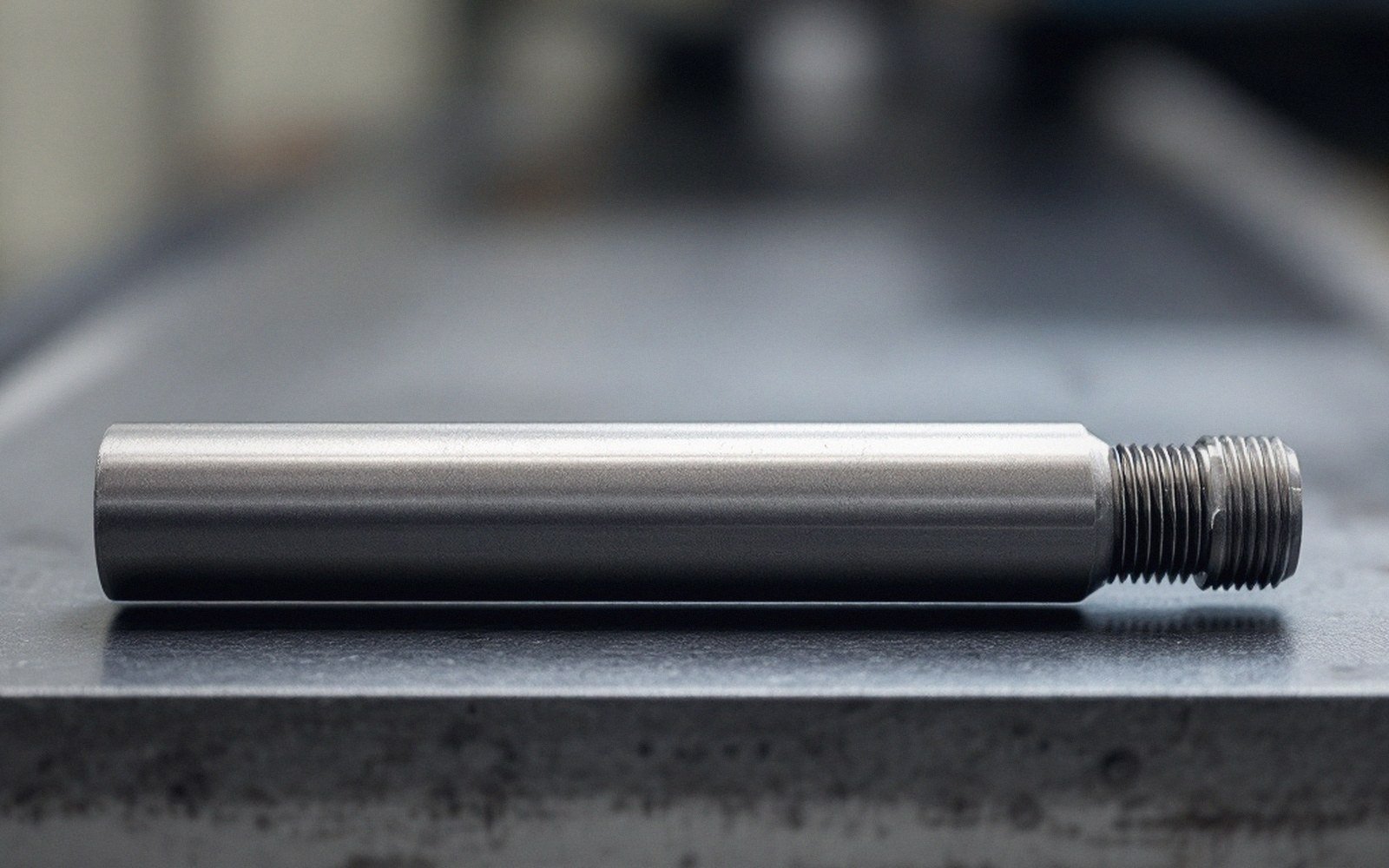
A machined test bar, pulled apart, honestly reports about ten thousand tonnes of steel. How a coupon is cut, what the test measures, and the statistics that let one small specimen speak for a heat.- 13Ductile and Brittle Are Behaviours, Not MaterialsThe same steel can do both depending on temperature, rate and geometry. What shifts a material from one behaviour to the other, and why the transition temperature is one of the most consequential numbers in the field.
- 14Strain HardeningWhy a metal that has been deformed becomes harder to deform further, what that does to the shape of the curve, and how the effect is used deliberately in manufacturing.
- 15The Sum of Small DaysNo single cycle is dangerous. Fatigue is the arithmetic of millions of harmless loads, and it is the mechanism behind a large share of in-service failures. How damage accumulates, and why the fatigue limit is a more slippery idea than it looks.
 16
16Ductile Overload
The honest failure: too much load through a material doing exactly what it said it would. What it leaves behind — necking, a dimpled surface, visible warning — and why it is the failure engineers prefer.- 17Brittle FractureNo stretch, no warning, no second act. What changes a material from ductile to brittle, the flat bright surface with its chevron markings pointing home, and the historical failures that made the mechanism famous.
- 18Fatigue CrackingBeach marks on a fracture face record a crack's whole history — where it started, how long it worked, how it finished. Reading a fatigue surface, and why the final overload is the smallest part of the story.
- 19BucklingFailure by geometry rather than by strength: a column that was strong enough but not straight enough. Slenderness, end conditions, and why buckling can happen far below the material's capacity.
- 20CreepAt temperature, time joins the load case. The slow exchange of shape for survival, where creep governs, and why a component can fail without the load ever changing.
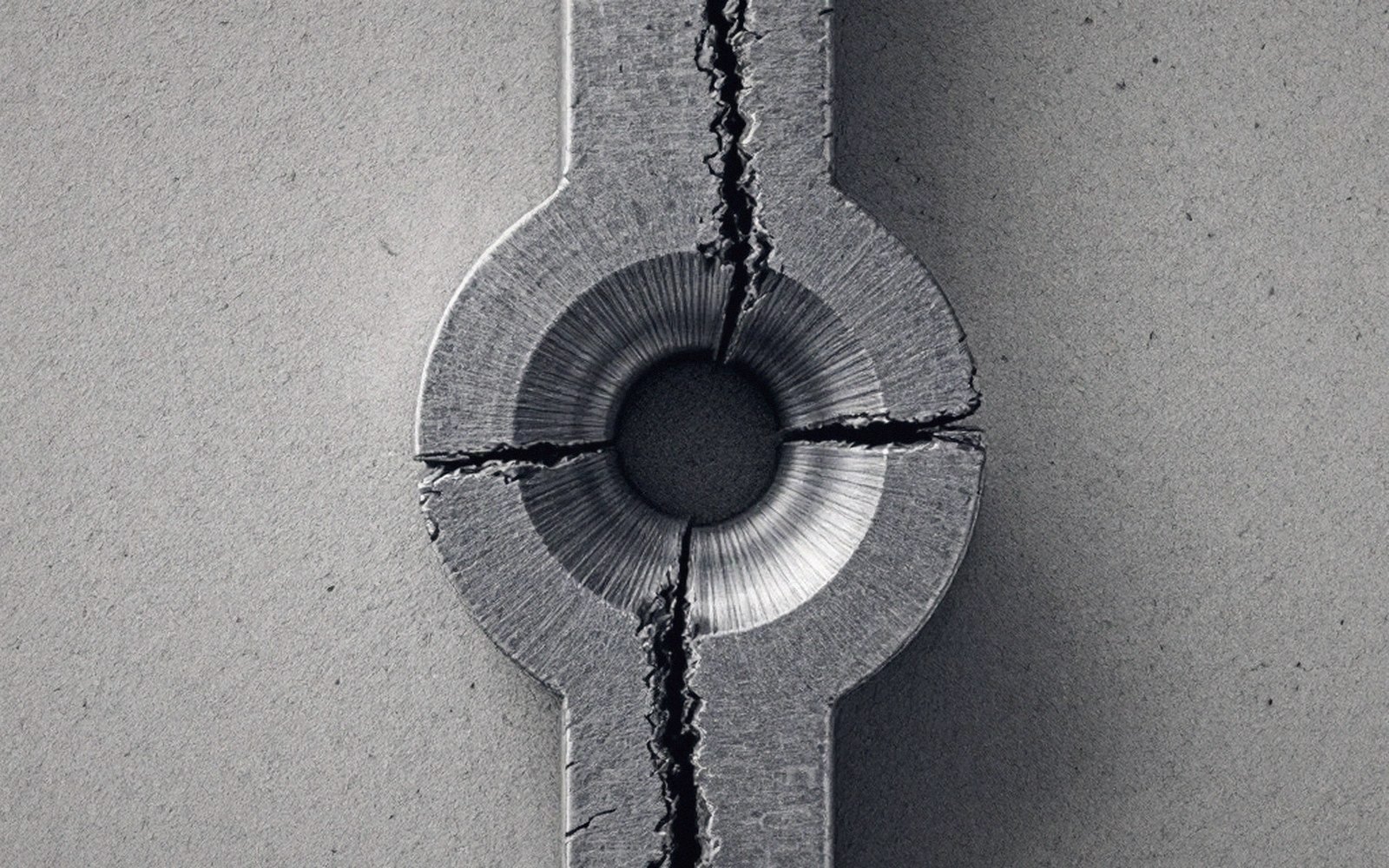
- 21Stress-Corrosion CrackingA material, a stress and an environment — each harmless alone, dangerous together. Fine branching cracks, hard to see and easy to miss on inspection, and the specific combinations that cause it.
Where the Numbers Come From
The axes themselves — tests, standards and the origin of the allowable.Open the region →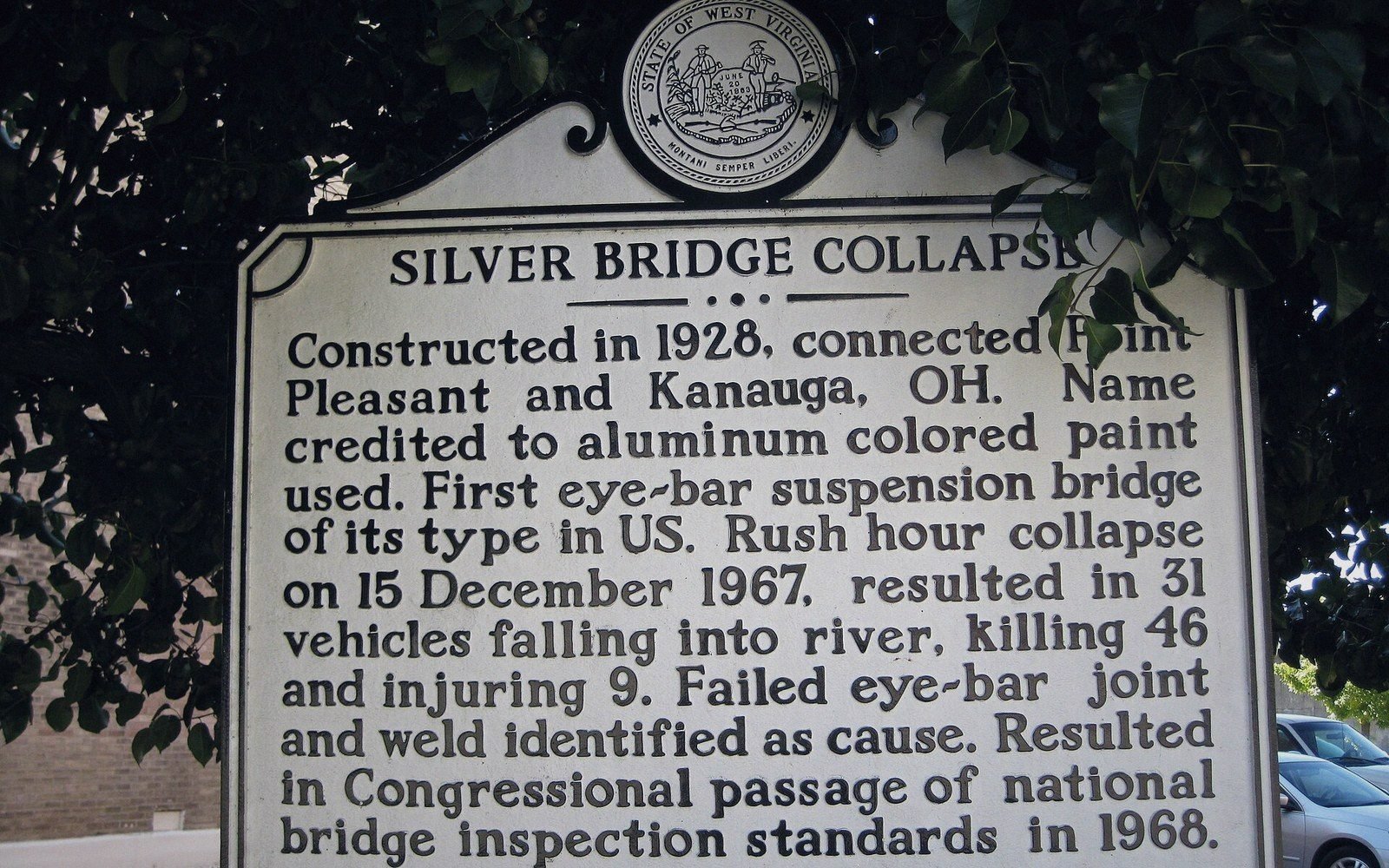 22
22What the Silver Bridge Changed
One eyebar out of hundreds, one crack a few millimetres deep, and the reason every highway bridge in America is now inspected on a schedule. The 1967 collapse at Point Pleasant told soberly, and the two changes it forced: mandatory inspection, and the phrase 'fracture critical'.- 23What a Standard Actually GovernsStandards are referred to by number and scope, not reproduced. What a standard is for, who writes one, how it becomes mandatory, and why reading one out of context is worse than not reading it.
- 24How a Test Becomes a NumberThe path from a laboratory result to a design value: repeat testing, statistical treatment, characteristic values and the deliberate conservatism applied at each step.
- 25The Origin of the AllowableWhere the allowable stress in a code actually comes from, how much of it is measurement and how much is accumulated caution, and why the answer is uncomfortable.
 WIFEY Shows that the structures built to last are always engineered to carry the heaviest loads.
 Icon Male Pushes past every written standard to explore exactly where the real limits are drawn.
 Mom Is Horny Reminds us that the highest-rated vessels are the ones built to handle real pressure.
 Big Tits Round Asses Appreciates curves the way engineers appreciate a well-distributed load across a frame.
 College Rules Documents what really happens when tested limits finally give way behind closed doors.
 Sweetheart Video Proves the strongest bonds are built on genuine connection, not rated load.
 MixedX Sets a new European standard for what happens when two forces meet at their rated limit.
 Facials4K Understands that when the full load finally lands, tolerance margins matter most.
 Model Time Strips away the safety margins and tests exactly what authentic performance looks like under load.
 Brother Crush Explores what happens in the gap between the number on the drawing and real-world yield.
 Public Agent Proves the most unpredictable stress tests happen well outside the controlled laboratory.