READING 14 · MATERIALS · THE HARDENING BRANCH
Strain Hardening
Deform a metal once and it resists the next deformation more. The material has changed, and the change is permanent.
§ 01What the Dislocation Does
Pull a metal specimen past its yield point and something irreversible happens inside the crystal. The grains do not simply stretch; atomic planes slide over one another along specific crystallographic paths, and the agents of that sliding are line defects called dislocations — microscopic irregularities in the crystal lattice that move through the material under shear stress.
The first dislocations move relatively freely. But as plastic deformation continues, more dislocations are generated, and they begin to interfere with one another. They pile up at grain boundaries, tangle, and pin each other in place. The more deformation has already occurred, the more crowded this microstructural traffic becomes — and the harder it is for any further dislocation to move. Increased resistance to dislocation motion is, at the atomic scale, exactly what increased strength means. The material has used up some of its capacity for easy plastic flow, and what remains is harder to unlock.
This is strain hardening, also called work hardening or cold working. The terms are interchangeable; the phenomenon is the same.
Mechanism and vocabulary
- Dislocationa line defect in a crystal lattice; the agent of plastic deformation in metals
- Strain hardening / work hardening / cold workingthree names for the same phenomenon: increased resistance to further deformation following plastic strain
- Annealingheat treatment above the recrystallization temperature that dissolves the accumulated dislocation tangles and restores ductility
- Face-centred cubic (FCC)crystal structure (e.g. copper, austenitic stainless) associated with high strain-hardening rates
- Recrystallizationnucleation of new, strain-free grains during annealing; the mechanism by which hardening is reversed
§ 02What It Does to the Curve
On a stress–strain plot, the effect is visible as the upward slope of the curve beyond the yield point. A perfectly plastic material would flow at constant stress once yielding began; the curve would run flat. Real metals do not do this. The curve climbs — at a rate and for a distance that depends on the alloy, its initial temper and its crystal structure. Face-centred cubic metals like copper and austenitic stainless steel strain-harden aggressively; body-centred cubic steels and hexagonal metals like titanium do so more moderately.
The practical consequence is that the stress required to continue deforming the material rises as deformation accumulates. A component being cold-formed is, at each successive increment of strain, harder than it was at the previous one. This is not damage in the usual sense — the material is not cracking — but it is a consumption of ductility. A metal that has been heavily cold-worked has a higher yield and tensile strength than the same metal in its annealed condition, and it has less remaining elongation before fracture.
Where the effect is engineered
- Cold-drawn wire: chemistry stays constant; tensile strength rises because of accumulated plastic strain during drawing
- Cold-rolled plate: hot and cold rolling of the same alloy produce different property profiles for this reason
- Prestressing strand: cold drawing is part of the specification process, not incidental to it
- Shot peening: surface layer hardened and placed in compression deliberately, to resist fatigue crack initiation
§ 03The Effect Used Deliberately
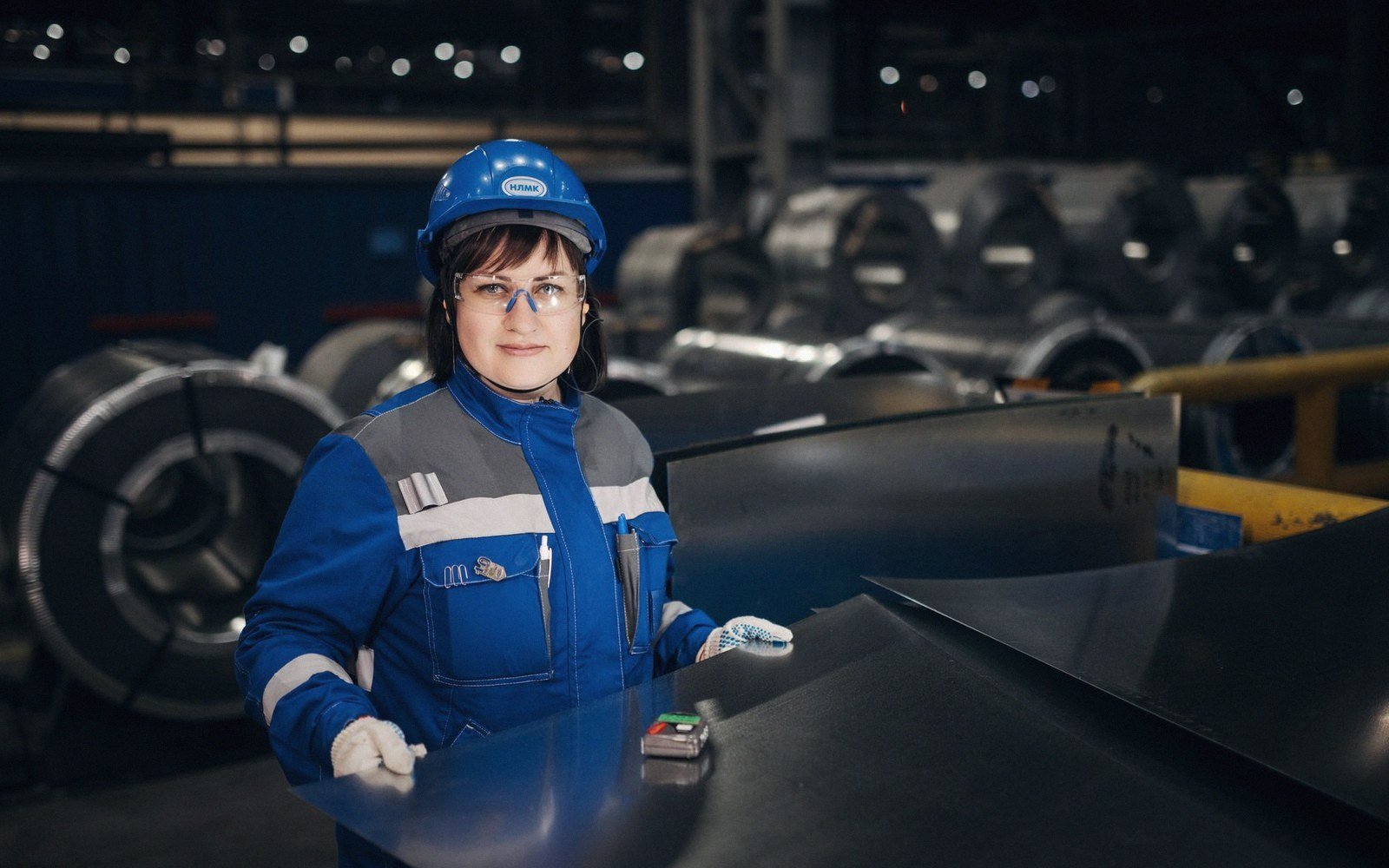
Manufacturers exploit strain hardening constantly. Cold drawing of wire raises its tensile strength substantially above that of the same alloy in bar form. Rolling a steel plate at room temperature — as distinct from hot rolling, which allows recovery and recrystallization — leaves the plate in a hardened, prestrained condition. Prestressing strand for concrete is cold-drawn specifically to achieve a yield strength the chemistry of the steel alone would not deliver.
Shot peening introduces compressive residual stress into a surface layer by deforming it intentionally through impact. The surface hardens; the compressive stress it carries makes it harder for a fatigue crack to initiate and grow there. The benefit is real, the mechanism is strain hardening, and the depth of the affected layer is deliberately controlled.
Where the hardening is not wanted, it is reversed by annealing — heating the metal above its recrystallization temperature so that new, dislocation-free grains nucleate and grow, restoring ductility at the cost of the strength that had been accumulated.
The boundary between strengthening and embrittlement is what the manufacturing process is managing. Strain hardening is not a side effect to be corrected; it is a mechanism to be steered.