READING 21 · HOW IT BREAKS · PAST ULTIMATE
Stress-Corrosion Cracking
A material, a stress and an environment — each harmless alone, dangerous together. Fine branching cracks, hard to see and easy to miss on inspection, and the specific combinations that cause it.
§ 01When None of the Factors Alone Would Kill It
Three ingredients, each individually innocuous: a susceptible material, a sustained tensile stress, and a specific chemical environment. Remove any one of them and nothing happens. Keep all three together long enough, and a component that looks fine, carries its load comfortably and shows no sign of distress can fracture without warning. That is the character of stress-corrosion cracking — not a gradual, measurable degradation but a quiet conspiracy that announces itself only at the end.
The stress does not need to be large. It does not need to approach yield. Residual stresses left by welding, cold-working or press-fitting are often enough — stresses the component carries from its first day in service without anyone loading it at all. The environment does not need to be aggressive in the general sense; many combinations that cause stress-corrosion cracking involve solutions mild enough to drink or atmospheres present in ordinary indoor air. And the material does not need to be poorly chosen. High-strength alloys, stainless steels, brass, aluminium alloys, titanium — the susceptibility list is long and counterintuitive, and it is specific: a given alloy is vulnerable to certain environments and immune to others, with no obvious rule connecting them.
The name survives because it is specific and memorable
§ 02The Mechanism: Crack Tip as Electrochemical Reactor
Two broad families of mechanism are discussed in the literature, and in practice they often overlap. In the anodic dissolution model, the crack tip is electrochemically active — metal dissolves preferentially there, driven by the local stress state, and the crack advances chemically faster than any general corrosion on the surrounding surface. In the hydrogen embrittlement model, the environment produces atomic hydrogen, which diffuses into the metal ahead of the crack, reduces local ductility in that small zone, and allows brittle fracture to propagate through material that would otherwise stretch and absorb energy before breaking. Which mechanism dominates depends on the alloy and the environment, and the distinction matters because the two mechanisms respond differently to changes in potential, pH and temperature.
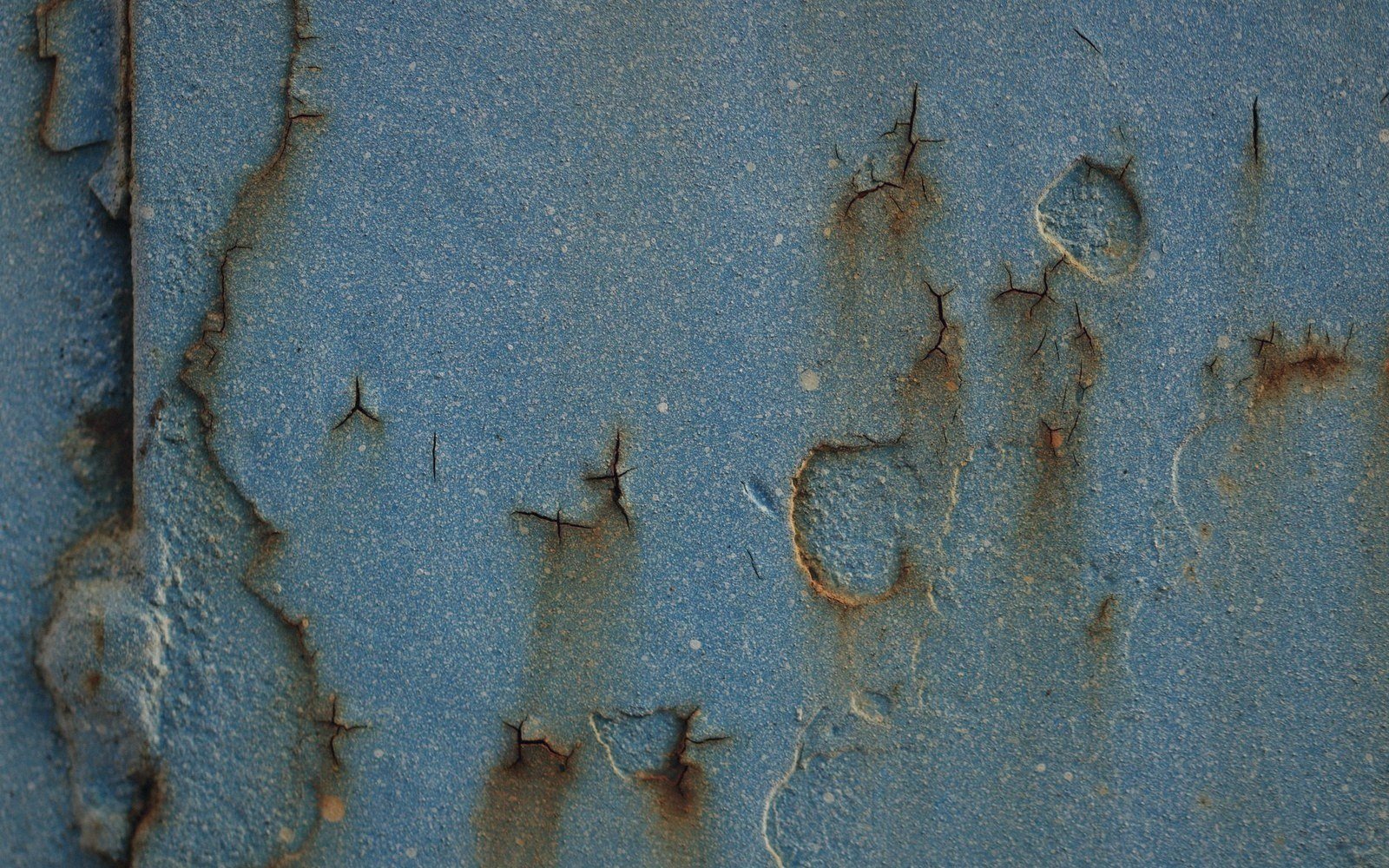
What both share is the crack's geometry. A stress-corrosion crack tends to be fine, tight and branching — a fracture face that has not opened significantly, a path that meanders through the grain structure (transgranular) or follows grain boundaries (intergranular) depending on the specific combination at work. Transgranular cracking in austenitic stainless steel exposed to chlorides produces a characteristic forked, branching pattern that can be identified on a fracture surface or in a metallographic cross-section. Intergranular cracking tends to leave a cleaner, faceted fracture face that can be mistaken for other mechanisms.
Both geometries share a practical problem: the crack is hard to find. Magnetic particle inspection cannot be used on non-ferromagnetic materials. Dye-penetrant testing requires the surface to be open, and a tight crack may not draw the penetrant in. Eddy current and ultrasonic methods can detect stress-corrosion cracks but require careful technique and good calibration — the same crack visible in cross-section after failure was often invisible on the last inspection. This is not always an inspection failure. Sometimes the crack was simply not yet large enough to detect by the method available.
The canonical material–environment pairs
- Austenitic stainless steel + chloridesespecially at elevated temperature; concentration matters more than bulk level
- Brass + ammonia / amineshistorical term "season cracking" still used; residual stress from cold-forming is the stress source
- High-strength steel + hydrogen sulfide"sour service"; governed by NACE MR0175 / ISO 15156
- High-strength aluminium (7000-series) + salt / marine environmentshort-transverse direction most vulnerable; temper selection is the usual mitigation
§ 03The Specific Combinations That Matter
Every practising engineer eventually learns the canonical pairings. Austenitic stainless steels — the 300-series alloys found throughout the chemical process industry, food processing and marine applications — are vulnerable to chloride-induced stress-corrosion cracking at temperatures that can be well below boiling. The chloride threshold that matters is not the bulk concentration in the process fluid but the local concentration at a crevice, a wetted surface that dries and reconcentrates, or a heat-transfer surface where evaporation occurs. Trace chlorides in insulation, absorbing moisture and concentrating against a warm pipe surface, have initiated cracking from outside while the pipe carried something entirely benign inside.
Brass alloys in the presence of ammonia, amines or certain amine-bearing atmospheres are susceptible to a mechanism historically called season cracking — a term that dates to the nineteenth century, when cartridge brass components stored in stables failed during certain seasons when ammonia from manure was present in the air. The residual stress from cold-forming the cartridge cases supplied the stress component; the atmospheric ammonia supplied the environment. The name survives because it is specific and memorable.
High-strength steels above a certain yield strength threshold become progressively more susceptible to hydrogen-assisted cracking, which is mechanistically related and sometimes separated from stress-corrosion cracking in the literature and sometimes grouped with it. Hydrogen sulfide environments — sour service, in the language of the oil and gas industry — demand alloy selection and hardness limits codified in standards like NACE MR0175 / ISO 15156 specifically because of this susceptibility. The standard exists because the failure mode is real, was encountered repeatedly in the field, and required a systematic answer.
Aluminium alloys, particularly the high-strength 7000-series alloys used in aerospace structures, are susceptible to stress-corrosion cracking in salt-fog and marine environments in the short-transverse grain direction — meaning the direction most likely to be loaded in tension by fasteners, interference fits or assembly stress. The alloy's strength and its susceptibility are not independent variables; the heat treatment that produces maximum strength often also produces maximum susceptibility, and the practical answer is either a less-aggressive temper or a geometry that avoids tensile stress in the vulnerable direction.
How it looks on a fracture surface
- Transgranular crackingforked, branching path through grains; characteristic of chloride SCC in stainless
- Intergranular crackingfollows grain boundaries; faceted face, can resemble other brittle mechanisms
- Crack is typically tight and finemay not draw dye penetrant; difficult to detect before critical size
§ 04What Changes in Practice
Understanding stress-corrosion cracking changes how engineers think about residual stress. A weld that is sound in every mechanical sense may still be a liability if it introduces residual tension into a susceptible alloy in the wrong environment. Post-weld heat treatment, shot peening to introduce a compressive surface layer, or selecting a weld filler that is less susceptible than the parent metal are all responses to this. They are not conservatism in the sense of adding margin; they are targeted interventions against a specific mechanism.
It also changes inspection strategy. Because the cracks are fine and tight, and because failure can be sudden once a crack reaches a critical size, inspection intervals justified purely on the basis of visible corrosion or mechanical wear may not be appropriate. Fatigue cracking and stress-corrosion cracking are sometimes found together, because the stress concentrations that promote one tend to promote the other, and because both can operate simultaneously in service — the crack that formed by one mechanism then propagates under the other.
The practical lesson is not that these materials are bad or these environments uniquely dangerous. It is that the three-variable interaction means a component can be correctly specified for its mechanical loads, correctly selected for general corrosion resistance, and still fail — because a specific combination was not anticipated. That anticipation is what design against stress-corrosion cracking actually requires: thinking about the combination, not the components in isolation.
An independent publication about limits, testing and safety margins. Not engineering advice, not a standard, and not a substitute for a qualified engineer.