READING 1 · LOADS · THE ELASTIC REGION
Proof Load
The overload carried before the first working day, and what it quietly doesn't prove. Why proof testing is a screening tool rather than a demonstration of capacity, and what a passed proof test actually tells an owner.
§ 01The overload you run before the first working day, and what it quietly doesn't prove
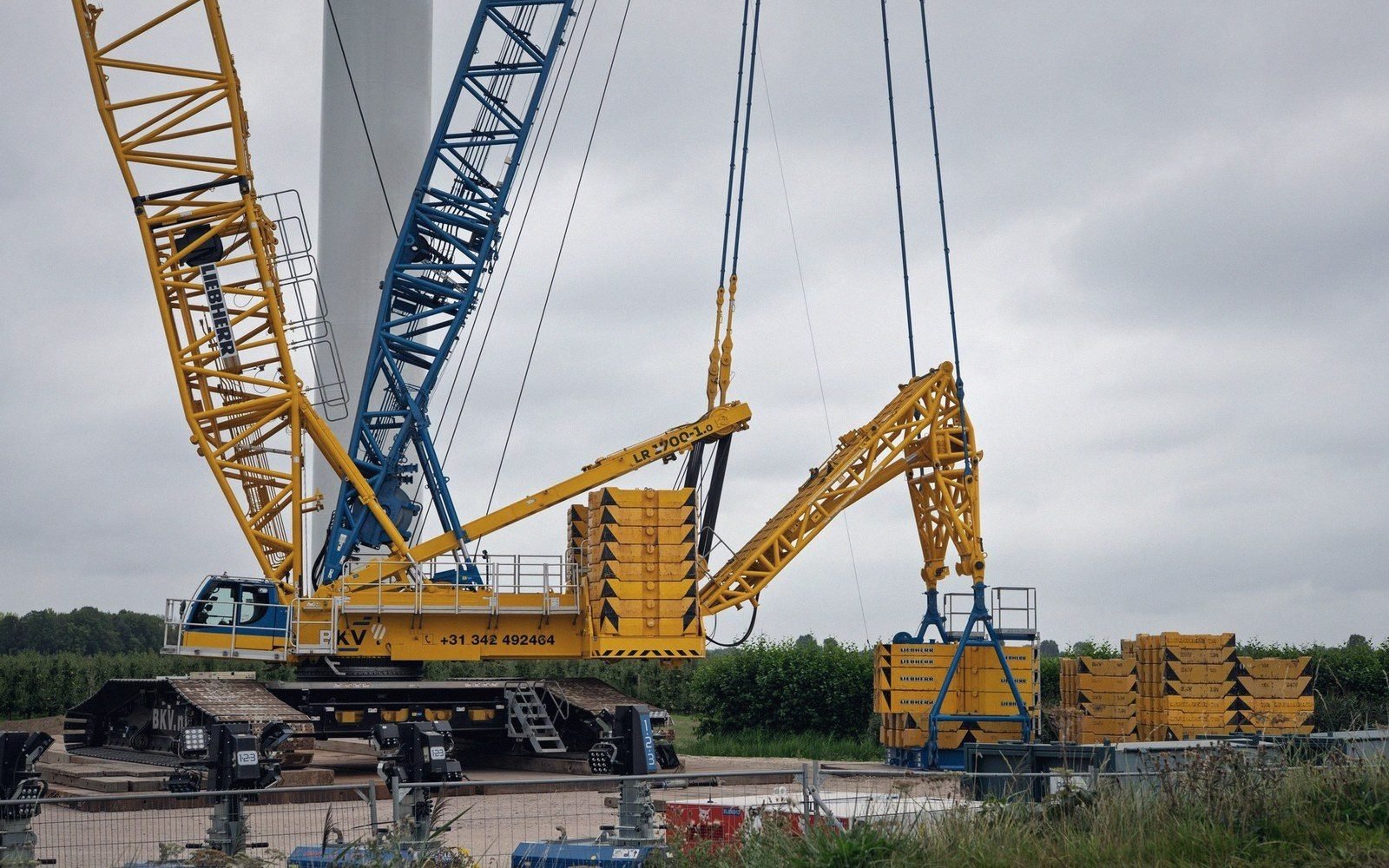
Before a new crane hook lifts its first commercial load, before a pressure vessel goes into service, before a suspension bridge opens to traffic, something heavier than the rated load is applied — held — and removed. The structure either survives without incident or it doesn't. That event is the proof test, and the load applied during it is the proof load.
The logic sounds straightforward: subject the thing to more than it will ever see in service, and confidence follows. But the confidence on offer is narrower than it looks, and understanding why is most of the value in the concept.
The test screens for the conditions of the test
What the test does and doesn't establish
- Proof loada load above the working load, applied before service, to screen for gross defects
- Screening functioneliminates items with serious hidden flaws; does not establish ultimate capacity or fatigue life
- Residual effectsproof loading is not mechanically inert; it can leave residual stresses, minor deformation, or in brittle materials miss temperature-dependent defects
- Certificate scopea passed proof test is evidence of condition on test day, under test conditions; not a guarantee of service life
§ 02What a proof test actually does
The proof load is typically set at a defined multiple of the working load — the exact ratio depends on the category of equipment and the standard governing it, but the multiplier is almost always greater than one and less than the load at which the item would be expected to yield significantly. That gap is deliberate. The proof load is not an attempt to find the breaking point; it is an attempt to sit between the working load and the breaking point and use that position to do something specific.
That something is screening. When a batch of manufactured hooks, or a run of chain, or a population of lifting slings is proof-tested, the test eliminates items with serious hidden defects — inclusions, voids, manufacturing errors that would cause early failure under real loads. An item with a crack already half-way through its critical cross-section will not survive the proof load. One with sound geometry and sound material will. The test is ruthless about gross flaws and silent about everything else.
What it cannot do is establish ultimate capacity. Passing a proof test tells you the item held a specified load at a specified moment. It does not tell you how far above that load the item could go before it yields, how much further still before it fractures, or what its fatigue life looks like now that it has been loaded hard once. A proof test is a snapshot, not a biography.
There is also a subtler cost. Applying a large load and removing it is not free. In ductile materials, proof loading near and above yield can leave residual stresses and, in some configurations, slight permanent deformation — neither necessarily disqualifying, but neither nothing. In materials prone to brittle fracture, a proof test that finds no problem under ambient conditions might miss a defect that would propagate catastrophically at low temperature in service. The test screens for the conditions of the test. Service conditions can be different.
The logic of the multiplier
- The proof load multiple sits between the working load and the expected yield loadlarge enough to expose weak items, small enough not to damage sound ones
- The ratio is set by the governing standard for the equipment category; it is not a universal number
- The multiplier choice reflects a specific tradeoff: severity of screening against risk of damaging the population of sound items
§ 03The gap between the number and the knowledge
This is the recurring theme in how limits are established. The proof load is a real number, applied by real equipment, producing a real pass-or-fail outcome — and yet the knowledge it generates is bounded in ways the number itself doesn't advertise.
An owner who understands the proof test treats a passed certificate as what it is: evidence that, on test day, under test conditions, the item met a defined threshold. That certificate supports confidence in the screening it performed. It is not a guarantee of service life, not a demonstration of margin above working load, and not a substitute for inspection, maintenance schedules, and load monitoring once the item is in use.
The distinction matters most in life-safety applications. A crane hook that passed its proof test years ago has accumulated cycles since then, possibly in environments the original test knew nothing about. The fatigue cracking that ends a hook's service life begins not on proof-test day but across the working days that follow. Proof loading is the beginning of a component's documented history, not the end of the conversation about its fitness.
What the proof test genuinely offers is valuable: a standardised, reproducible, early-life culling of items too flawed to carry the job. Industries that depend on lifting, pressure containment and tensile structures depend on it for exactly that reason. But the test earns that value by being precisely what it is — a screening tool with a defined scope — rather than the broader assurance its name might suggest to someone who hasn't thought about where the line actually sits.